
By: Denise Rubenstein, Program Director ‘25-’26
Alli wiwa killa!
Cacao season is in full swing here in the Amazon from now until late April, and so begins the start of the processing of one of the most beloved commodities in the world.
Many scientists consider the Ecuadorian Amazon to be the origin of the first domesticated Theobroma cacao, initially used in traditional beverages by Indigenous groups more than 5,000 years ago. Today, cacao is cultivated primarily for the chocolate we know and love.*
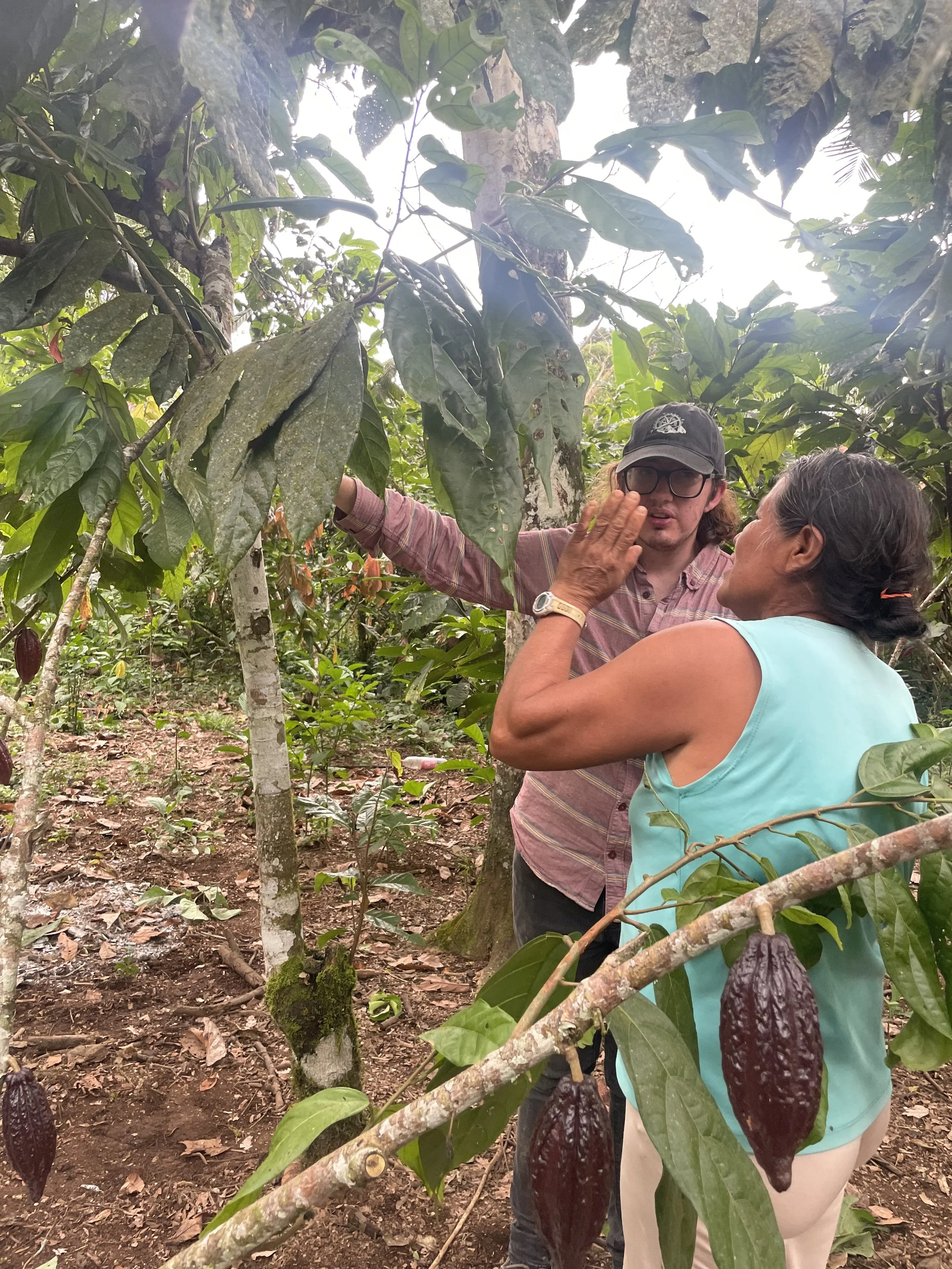
The most common types of cacao planted here in Shandia are Cacao Nacional (AKA cacao fino de aroma) and CCN-51. Nacional is internationally recognized for its fine flavor and use in luxury chocolates, while CCN-51 is valued for its high yield, productivity, and resilience. Working with these two varieties allows families to balance production of high quality cacao with reliable harvests.
In Shandia, each family typically cultivates between one and three hectares of cacao on their chakra, within agroforestry systems that often include plantain, yuca, fruit trees, hardwoods, and medicinal plants. Cacao is not grown as a monoculture crop here. It is part of a living ecosystem that depends on other surrounding plants for nutrients through the root systems, demonstrating how just the Amazonian flora is deeply interconnected, even on cultivated land!
They say in Shandia that cacao is like gold for the community. It is one of the principal livelihood products of the region. Families can earn approximately $5 per pound of dried beans, and high-quality Nacional cacao can reach premium prices on international speciality markets, sometimes up to $50 per pound!
This primary source of income allows families to educate their children, invest in their homes, and strengthen their farms. It provides stability rooted in the land. Unlike industrial mining, which is temporary and environmentally destructive, cacao can be maintained for generations. A well-managed cacao plot continues producing year after year, and later becomes a family inheritance, passed down as both land and knowledge.
Cacao tells a story of history, culture, and relationship with nature. Generational knowledge of how to harvest, ferment, and protect the trees reflects a profound understanding of the forest. For youth in the community, cacao represents a future rooted in renewed connections to Indigenous identity. Kichwa customs have slowly faded with newer generations, yet local cacao production promotes a new vision and value in the crop – rooted in conservation, stewardship, and long-term sustainability. The avenues that cacao opens show that economic opportunity does not have to come at the expense of nature nor the culture.
Chocolate is easy to take for granted. We grow accustomed to bars that are more sugar than cacao, highly processed and mass-produced for convenience. But real chocolate begins with real cacao, and real cacao is grown by real people. Families here carry knowledge that extends far beyond textbooks or traditional academia. It is living knowledge that has been cultivated through observation, experience, and deep relationship with the land.
As a Program Director here at Manna Project, it is a privilege to be able to learn from those who steward this knowledge and continue a practice that nourishes both the people and the rainforest.
* Sánchez, Víctor F. Vásquez, and Teresa E. Rosales. "El origen de la domesticación de Theobroma cacao “cacao”: la evidencia de la Amazonía-Revisión." Archaeobios 20 (2025): 2.