

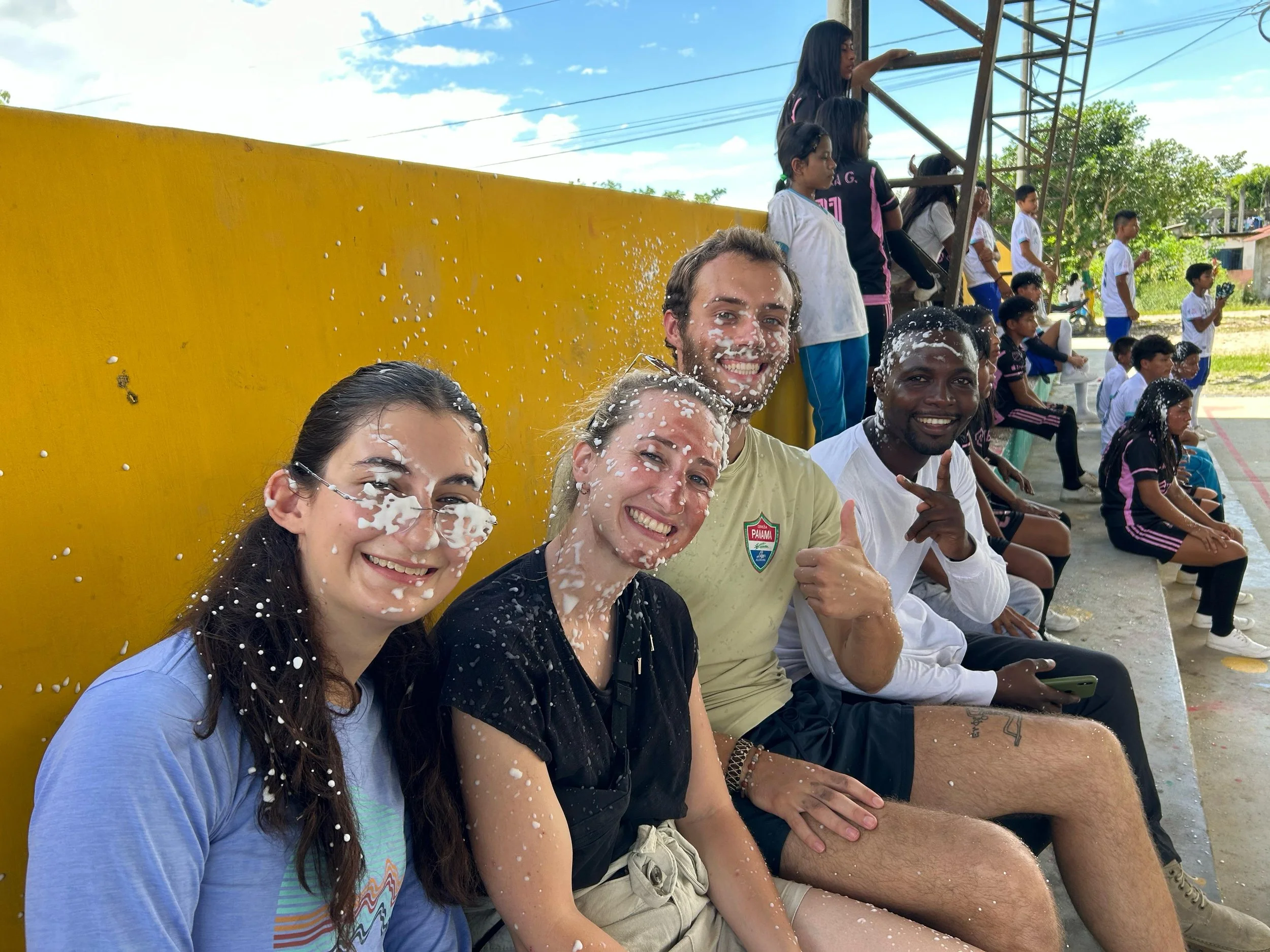
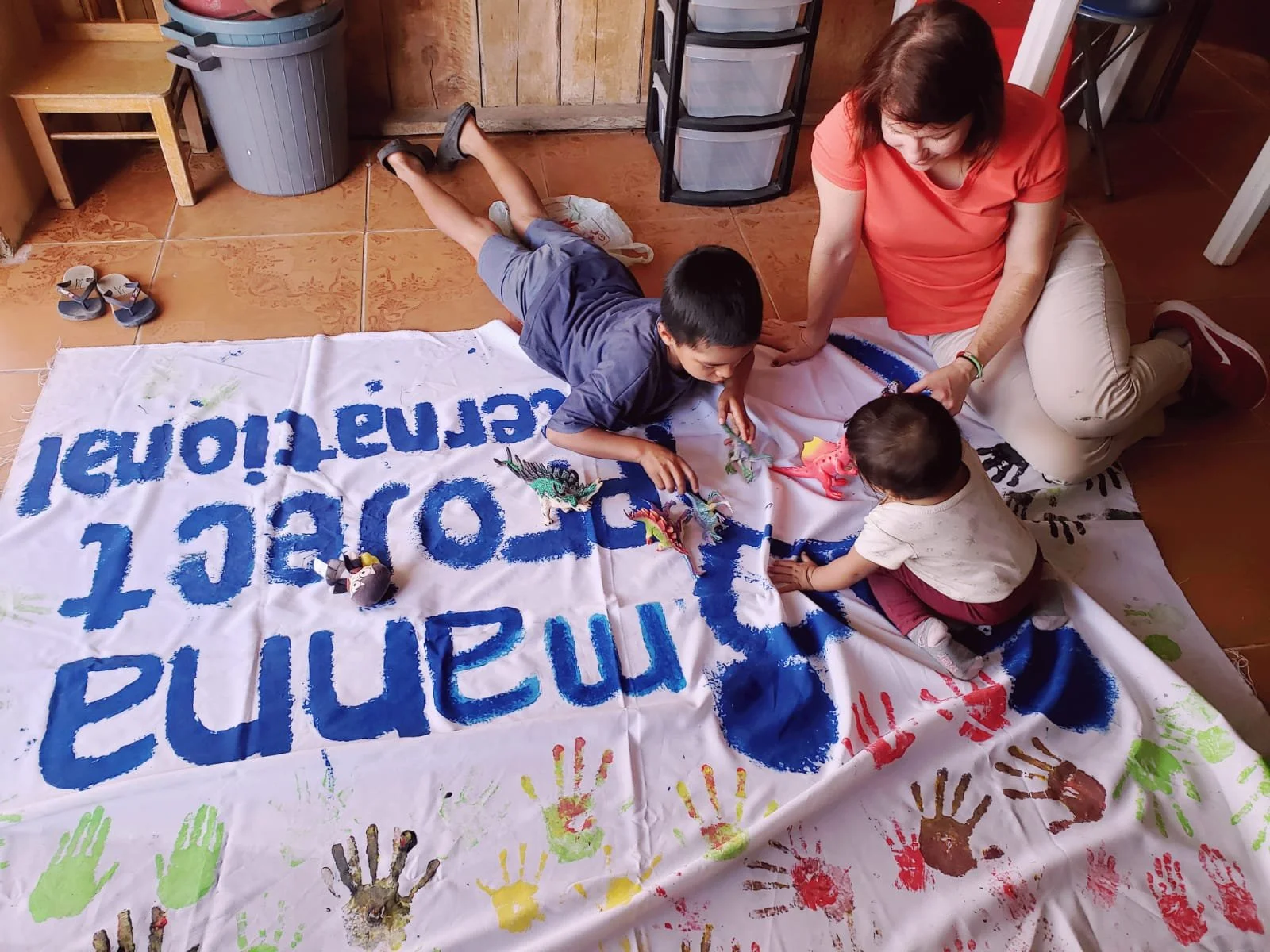
New things are happening here at Manna Ecuador! In the past months we have been seeking partner organizations in the area to offer our available hands and labor. Our ideas have finally begun coming to fruition! We have begun volunteering weekly at two different partner organizations. The first is called "Antorcha de Vida," and it is an organization which assists children with disabilities in education, therapy and vocational skills. This past week we took the kids to a local pool and were able to assist with pool therapy! We also volunteer at an organization called "Aliñambe," which houses youths from abusive or unstable homes. This organization not only houses the children but offers them an education, vocational training and a safe, family atmosphere many of them have likely never had before. Currently we work in the large farm at the organization which provides food and profit. In the future we hope to offer classes such as English and health as well. We're all very excited to reach out our hands to local organizations and can't wait to see how the relationships grow!
Viva la Mama Negra!


Lessons From Ecuador

I arrived
here in Ecuador just over two months ago. There have been many ups and downs to
the experience thus far, but I am so glad I am here. We had some extra time off
this weekend from our community programs, which got me reflecting on some of
the things Ecuador has taught me. Although simple, I believe these examples embody
the daily lives of the Ecuadorian people I have encountered.
Live in
the moment
Often I find myself looking or thinking to
the next thing. Whether it is dinner plans, a weekend trip, or next year’s job
hunt, I sometimes forget to slow down and focus on the present. My interactions
with Ecuadorians consistently remind me of the importance to slow down and
appreciate the moment. One example that sticks out in my mind is from a late
night party with friends. It was well past midnight and one Ecuadorian friend
took out his guitar, another took out her saxophone and the rest of us joined
in singing traditional songs. This moment stood still in time. We all shared
that moment together – no distractions from the outside world.
Patience
can be rewarding
 The other day I walked 5 minutes
through the pouring rain from our house to pay the electricity bill. While this
may require just the click of a button back home, I needed to stop by a nearby
tienda (small convenience store) to transmit the payment. The owner informed me upon arrival that her Internet
was down and that I would need to wait until it was back up. Initially I was frustrated,
but she offered me a seat, a snack and then we proceeded to share a few minutes
of conversation. This simple gesture brought new friendship to a potentially frustrating
situation. The patience I experience from Ecuadorians weekly has reminded me
that patience truly is a virtue.
The other day I walked 5 minutes
through the pouring rain from our house to pay the electricity bill. While this
may require just the click of a button back home, I needed to stop by a nearby
tienda (small convenience store) to transmit the payment. The owner informed me upon arrival that her Internet
was down and that I would need to wait until it was back up. Initially I was frustrated,
but she offered me a seat, a snack and then we proceeded to share a few minutes
of conversation. This simple gesture brought new friendship to a potentially frustrating
situation. The patience I experience from Ecuadorians weekly has reminded me
that patience truly is a virtue.
Having
enough = Happiness For Ecuadorians to have enough is to have
those they most care for their side. Ecuador reminds me daily what makes life
content: experiences shared with close friends and family. Nothing more is
necessary. Happiness can be found in these moments.
It is my
hope that I can carry these lessons and many more with me throughout my
remaining time here in Ecuador and beyond.
~Evan
Quinnell~
Trick or Treat?
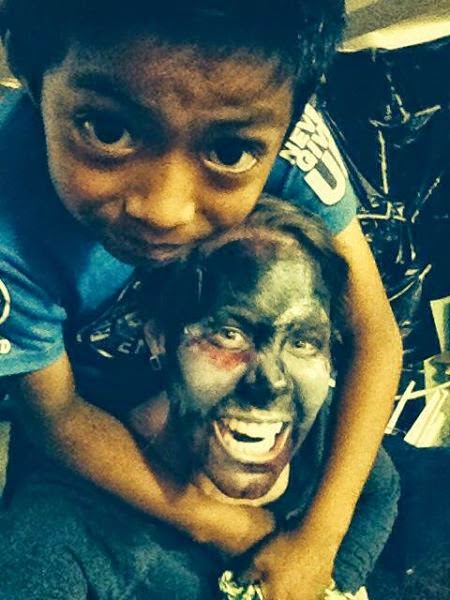 It was great to experience the cultural exchange between the
community members and our own Program Directors this weekend as we blended
American Halloween traditions with those of Ecuador’s Día de Los Difuntos. On the 31st, all of the PDs worked
together to host a Halloween party for the community members. The haunted house
was a huge hit for both kids and PDs alike – who knew it could be so fun to
scare small children, and that they would enjoy it just as much as we did?
It was great to experience the cultural exchange between the
community members and our own Program Directors this weekend as we blended
American Halloween traditions with those of Ecuador’s Día de Los Difuntos. On the 31st, all of the PDs worked
together to host a Halloween party for the community members. The haunted house
was a huge hit for both kids and PDs alike – who knew it could be so fun to
scare small children, and that they would enjoy it just as much as we did?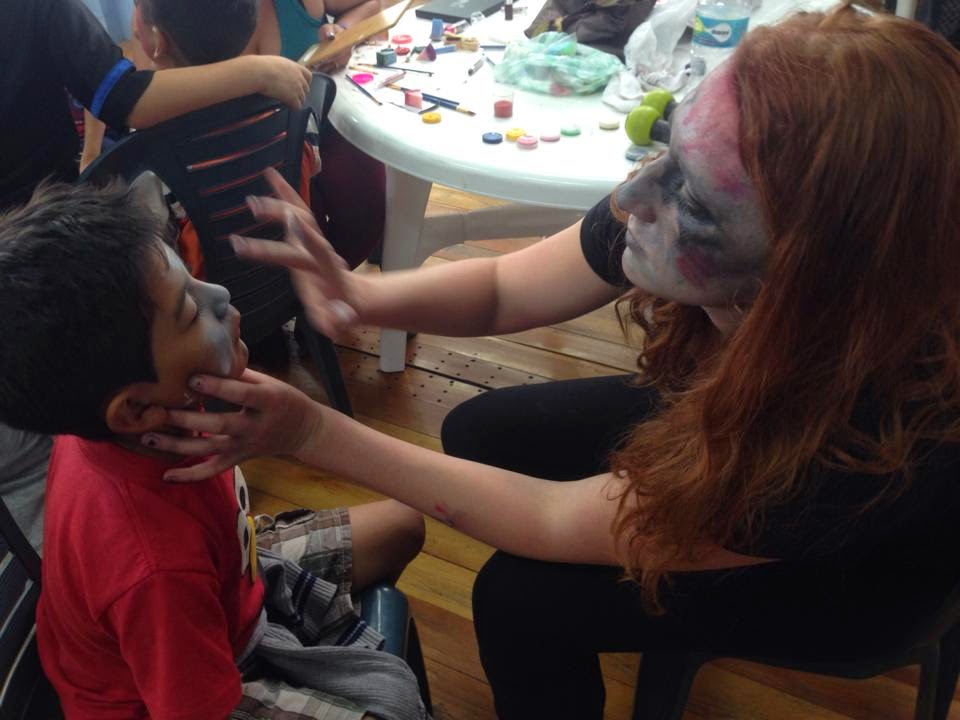 The next day the adult English classes shared a part of
Ecuadorian culture by teaching us how to make colada morada, a traditional
Ecuadorian beverage served the week of El Día de Los Difuntos. After three
hours of preparation the colada morada was finished and we all sat down
together to chow down on a colada morada and guaguas de pan.
The next day the adult English classes shared a part of
Ecuadorian culture by teaching us how to make colada morada, a traditional
Ecuadorian beverage served the week of El Día de Los Difuntos. After three
hours of preparation the colada morada was finished and we all sat down
together to chow down on a colada morada and guaguas de pan.
~ Kate McCaw~

