Although we may be miles away from a typical St. Patrick's Day celebration, I assure you we celebrated in style with green eggs and clothing, an Irish meal of Shepard's pie and soda bread, and of course a viewing of Boondock Saints. Mister Irish himself (Chet) spent last week in Lumbisi with one of our spring break volunteer groups teaching classes, painting murals and planting a vegetable garden. Since we only got to spend a night with the feisty North Carolinians, which mostly consisted of embarrassingly revealing questions deemed 'condor truths,' I'll let Chet explain a day in the life with the Duke spring breakers...
"The Duke spring break group accomplished some great manual and artistic labors in the week we were in Lumbisi. Like all things Erik and I do, we accomplished it with brutal honesty, a fun-loving attitude, and a little bit of insanity. It is important to remember that Lumbisi has a biting fly problem; and I mean like a Jean Paul Satre-style "The Flies" biting fly problem. While Erik and I spent the week living in the FEVI office, we ate all our meals at home stay. This was the same home stay where Sarita, one of FEVI's long term volunteers from the US also ate. Wednesday night, Bibi was in the area and had dinner with us and everyone at the table was involved in a very engaging debate between James Joyce and Jorge Luis Borges. Remember, James Joyce wrote Ulysses, arguably the best novel of the 20th century and in my opinion the gold standard in the modernist literature. Borges was a writer from Argentina. Given the distinct advantage Joyce has in this comparison. I'm a bit abashed to admit that it was more or less a tie.
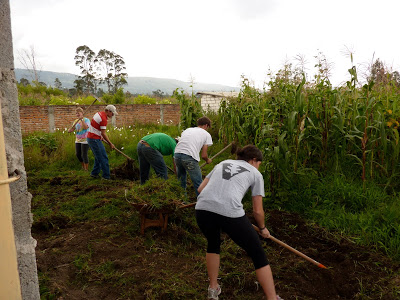
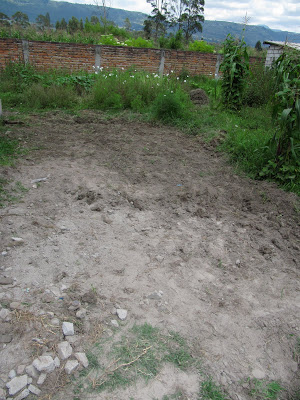
Thursday was our last day to complete our work projects. In the morning we all went up the to ecological forest reserve to collect straw for the garden we had been working in. To settle the dinner debate, in the afternoon we split up into two groups to see who could finish first: one with me to finish the murals we had been painting on the outside of the pre-school, and the other down in the gardens with Erik to finish up the work on the new beds. The beds were all dug and just needed to be layered with straw, fertilizer, and filled with dirt; however, there was one large rock in the corner of bed 2 we had been unable to remove.
About an hour and a half into our work projects for the afternoon, I look to my left and see Erik, with a stride of pride, enter the fence to the preschool with a huge rock in his hands. He draws near me and asks, 'Hey Chet, if you were going to name a rock after an author, what would it be?' I of course look at him like he is crazy. He then informs me that after an hour and a half, they had finally removed the gigantic rock in the corner of bed two and I was staring at a small piece of it. He then informed me “this is Borges” spiked the rock, and walked out of the yard in triumph. My comment was for him to bring the bug spray the next time he came back. This is why we work so well together and why, while the Duke spring break volunteers probably think we are crazy, we got a lot of work done in three and a half days and had a great time doing it.

Alberto, Erik and JJ dominating said rock

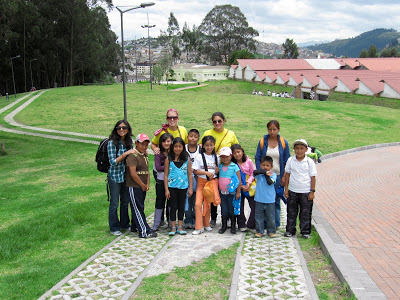
The whole group sight seeing in the centro historico
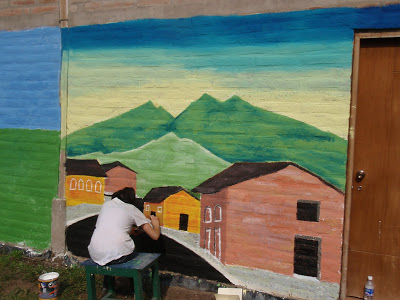
Maria puts some finishing touches on the wall mural

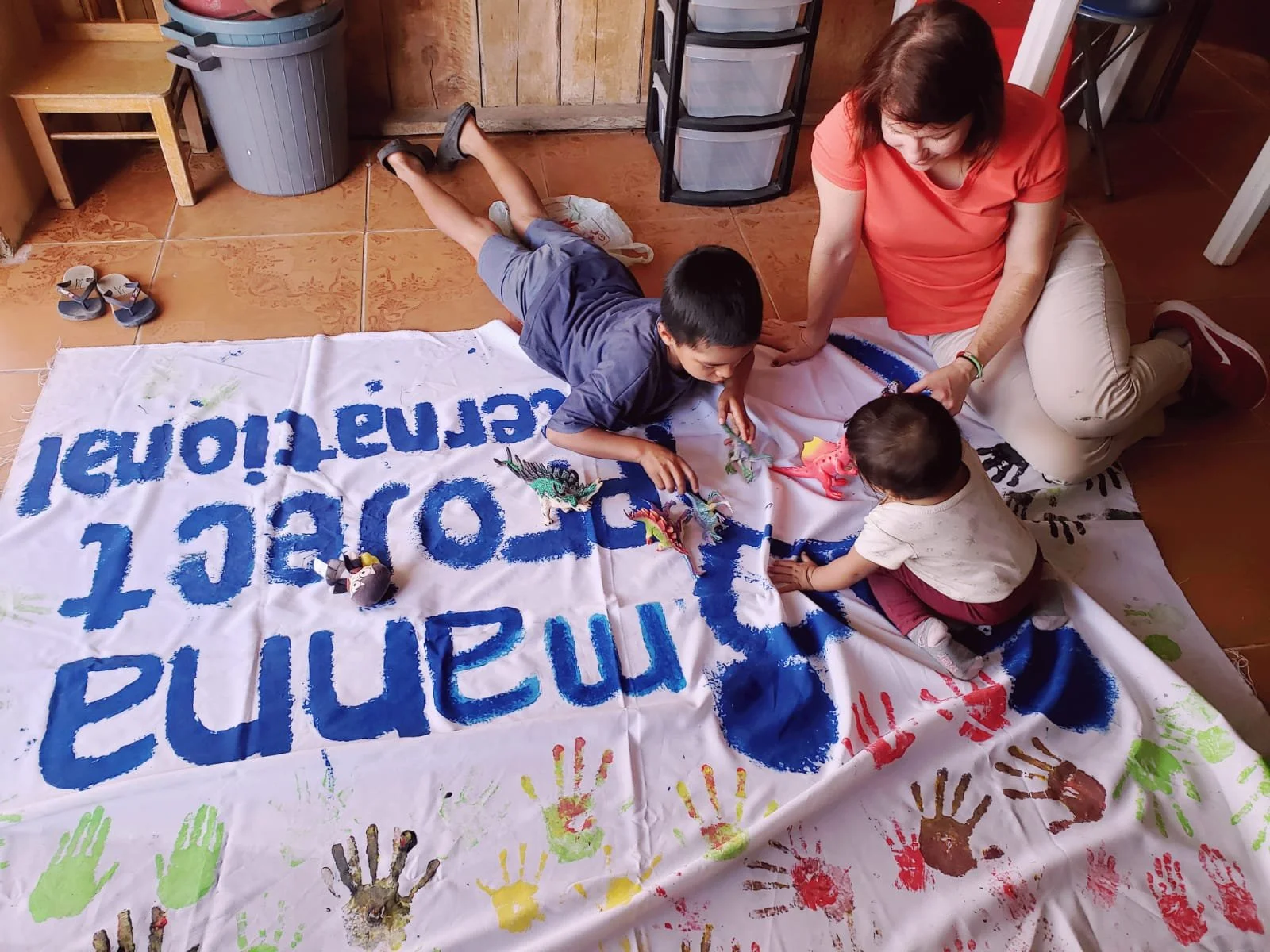
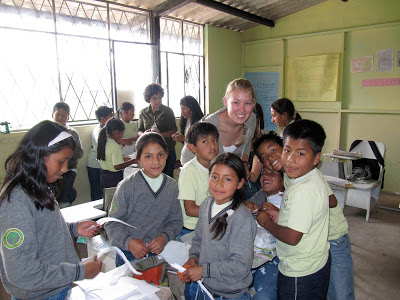
KP plays with some kids in Lumbisi

The group leaders, and their respective cuy heads, share a moment
Erik would like to set (sic) that 'we still beat ya’ll.'
-Chet"